
From Foundations to Fasteners, Every Component Has a Job
A well-made car park shade is easy to appreciate from the outside, but much of its quality comes from details that are not immediately visible. The parking shade fabric certainly plays an important role, yet it relies on an entire supporting system to perform properly over time. Steel sections, foundations, bolts, welds, tensioning points, and installation accuracy all contribute to the finished result. When one of those elements is poorly chosen or fitted, the weakness can eventually affect everything around it. That is why a dependable shade should be judged as a complete structure rather than simply by the color, shape, or appearance of its canopy.
The steel frame forms the backbone of the structure, so its specification deserves careful attention. Posts and beams need appropriate dimensions for the span they are supporting, while protective treatments such as galvanizing help reduce corrosion caused by long-term outdoor exposure. Fabrication quality matters here as well. Clean welds, accurate cuts, properly aligned sections, and consistent finishing help the frame come together without unnecessary stress. A structure that looks straight and balanced usually reflects careful preparation behind the scenes. Poor fabrication, by contrast, may make installation harder and can leave connections dealing with forces they were never intended to carry.
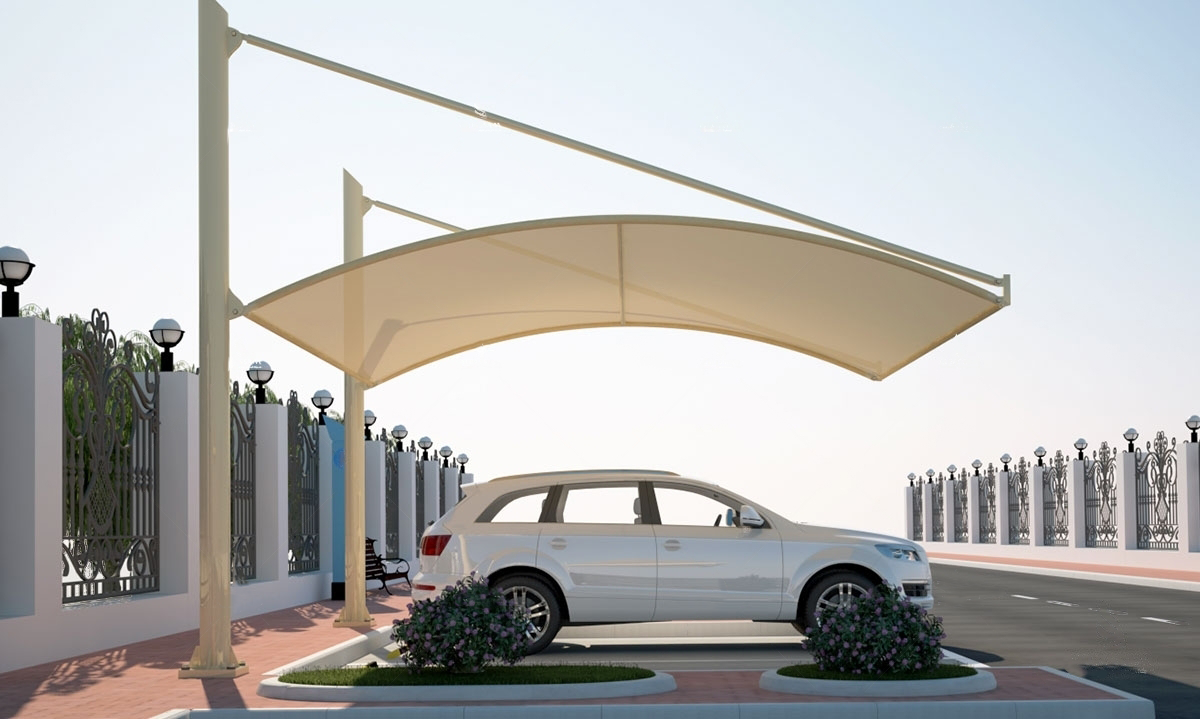
Below ground, foundations quietly perform one of the most important jobs. They transfer loads from the frame into the ground and help the shade remain stable when exposed to wind and everyday movement. Their size, depth, reinforcement, and position should match the engineering requirements of the project. Fasteners are equally easy to overlook, yet bolts, anchors, clamps, and other connections hold individual parts together under constant pressure. Using unsuitable fittings or installing them carelessly can create movement over time. Good construction treats these small components seriously, because a strong frame is only as dependable as the points where its pieces meet.
Tensioning is another area where workmanship becomes obvious once the structure begins operating outdoors. Fabric that is stretched too loosely can sag, collect debris, and lose its intended shape. Excessive or uneven tension may place unnecessary strain on fixing points and edges. Skilled installers adjust the membrane gradually so loads are distributed appropriately across the structure. The final surface should appear clean and controlled rather than wrinkled or distorted. Careful installation also includes checking levels, alignment, connections, and finishing before the project is considered complete. These final details often separate a structure that merely looks acceptable from one that feels properly engineered.
For property owners comparing different options, it helps to look beyond the most visible part of the shade. High-quality parking shade fabric is valuable, but its performance depends heavily on the steel supporting it, the foundations holding everything in place, the fasteners joining the structure, and the workmanship tying each stage together. Asking about fabrication standards, materials, corrosion protection, tensioning methods, and installation procedures can reveal far more than appearance alone. A strong car park shade is not created by one impressive component, it comes from many carefully chosen parts doing their jobs together, day after day, through years of outdoor use.
